
The engineering breakthroughs that turned a promising idea into the technology feeding billions
Where Academic Engineering Met Agricultural Innovation
While early pioneers like Simcha Blass developed the initial concept of localized irrigation in Israel, the Technion – Israel Institute of Technology provided the intellectual and scientific engine required to make drip irrigation reliable and efficient enough for worldwide use. This transformation represents a rare convergence: a regional agricultural concept evolved through rigorous mechanical engineering into an industrial revolution that now conserves water on six continents.
The central figure in this technological evolution is Raphael (Rafi) Mehoudar, a 1966 graduate of the Technion’s Faculty of Mechanical Engineering, whose inventions fundamentally solved the problems that prevented early drip systems from scaling globally.
Raphael Mehoudar’s Engineering Breakthroughs
Mehoudar’s contributions to drip irrigation technology addressed two critical engineering challenges that had plagued the industry:
Pressure-Compensating Emitters: Solving Uneven Water Distribution
Early drip systems suffered from pressure drops along the length of irrigation lines, causing plants at different elevations or distances from the water source to receive vastly different amounts of water. Mehoudar engineered an elastomeric diaphragm that automatically adjusts to line pressure changes, ensuring a constant water discharge rate regardless of elevation changes or pipe length. This single innovation made drip irrigation viable for fields with varied topography.
The Turbulent-Flow Labyrinth: Preventing Clogging
Sediment and biological growth chronically clogged the narrow spiral tubes used in early drip emitters. Mehoudar replaced these vulnerable pathways with wide, internal labyrinth pathways that generate high turbulence. This turbulent flow dissipates water energy while keeping fine particulates suspended, preventing them from settling and blocking the emitter. The labyrinth design transformed drip irrigation from a high-maintenance technology requiring constant cleaning into a reliable system that could operate for entire growing seasons.
A Prolific Inventor: 400 Global Patents
While still a student and military cadet at the Technion, Mehoudar invented the dual-flush toilet mechanism and a unique square-area sprinkler. He eventually registered approximately 400 global patents, with Netafim retaining manufacturing and distribution rights for his core drip irrigation technologies. These patents form the intellectual foundation of the modern drip irrigation industry.
The Technion’s Role: Faculty Mentorship and Legacy
The Technion’s influence on drip irrigation extends beyond providing Mehoudar with his engineering education. During the initial patenting phase, Professor David W. Pessen of the Technion’s Faculty of Mechanical Engineering worked closely with Mehoudar, advising him on mechanical drafting and the technical structuring of his foundational patents. This mentorship ensured that Mehoudar’s inventive insights could withstand the scrutiny of patent offices worldwide.
The Mehoudar Centre for Inventors
To preserve this legacy of innovation and cultivate the next generation of practical inventors, the Mehoudar Centre for Inventors was established in the Danziger Building on the Technion campus. Housed within the university’s entrepreneurship hub (t-hub), the centre provides:
– Advanced Prototyping Labs: Resources including 3D printers, laser cutters, and waterjet cutting machines help inventors turn abstract ideas into industry prototypes.
– Multidisciplinary Collaboration: A physical space where students and senior researchers from various faculties can collaborate and establish industry connections, following the model that produced Mehoudar’s own breakthroughs.
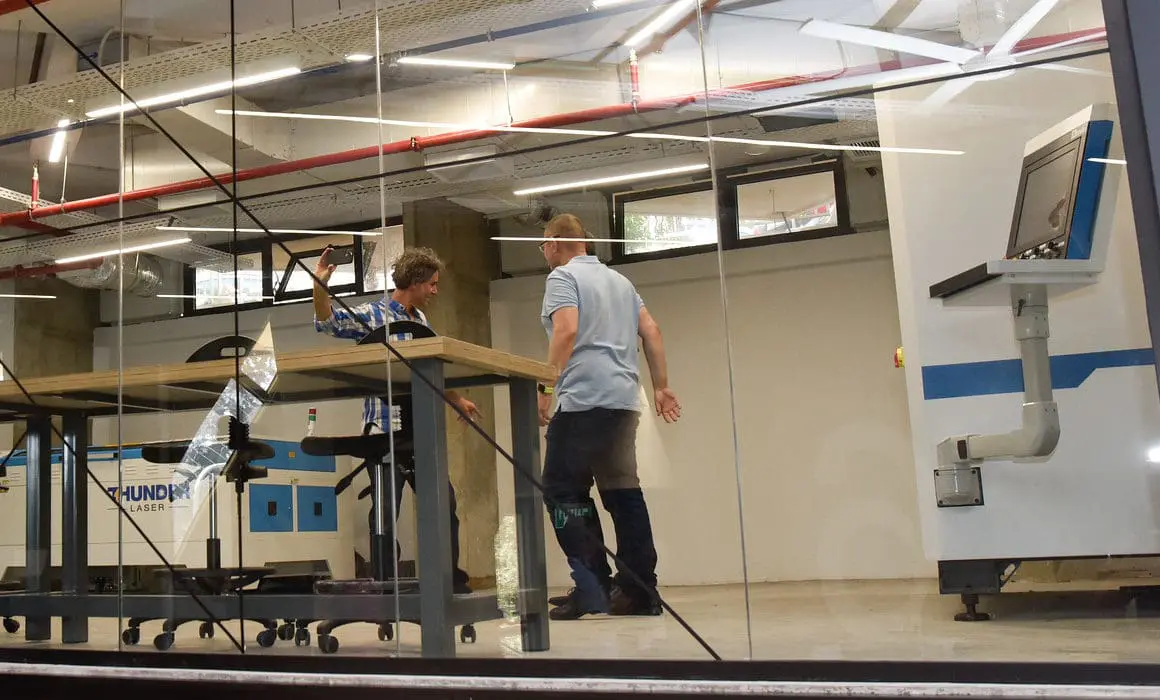
The centre embodies the Technion’s philosophy: transformative innovation emerges from the intersection of rigorous engineering training and direct engagement with real-world problems.
A Global Impact Starting in the Negev, Spanning Six Continents
Drip irrigation technology developed through the Technion-Mehoudar partnership has measurably reduced the environmental impact of major crops. Life cycle analyses show that corn grown with this technology releases 53% fewer carbon emissions and requires 24% less fertilizer compared to traditional flood irrigation.
These technologies now serve international humanitarian efforts. Solar-powered irrigation networks in Africa and Rwanda, based on the engineering principles developed at the Technion, provide food security to millions in regions where water scarcity once meant chronic hunger.
From Academic Engineering to Civilizational Infrastructure
The relationship between the Technion and drip irrigation demonstrates how academic engineering can transform the infrastructure of civilization. What began as a regional solution to water scarcity in Israel’s Negev Desert evolved through rigorous mechanical engineering into a technology that now irrigates crops on six continents.
Raphael Mehoudar’s pressure-compensating emitters and turbulent-flow labyrinths solved fundamental physics problems that prevented drip irrigation from achieving global scale. The mentorship of Professor David W. Pessen ensured these innovations could be properly protected and disseminated worldwide.
Today, approximately 7% of the world’s irrigated land uses drip irrigation technology, conserving billions of gallons of water annually while increasing crop yields. Behind this global infrastructure stands a 1966 mechanical engineering graduate, his Technion mentor, and a university that continues to honour this legacy through the Mehoudar Centre for Inventors.
This is the work of the Technion: turning engineering challenges into global solutions.