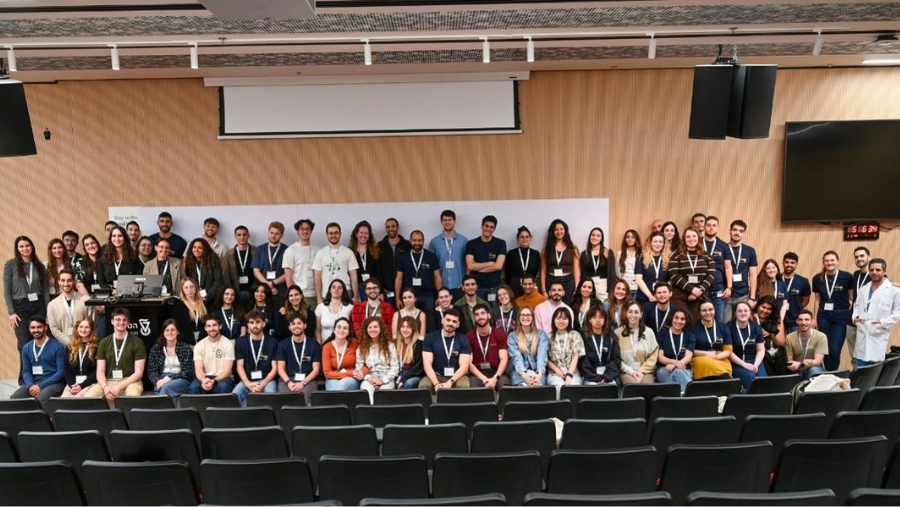
In three days, more than 70 students at the Technion – Israel Institute of Technology designed working prototypes for problems that usually take years to solve: a stool test patients can take without ever touching the sample, a patch that watches transplanted tissue for signs of failure, and an app trained to catch depression in children before a diagnosis does.
That’s T2MED, the Ruth and Bruce Rappaport Faculty of Medicine’s annual hackathon, now in its 12th year. Students from medicine, engineering, and science spend an orientation day at Rambam Health Care Campus, then three intensive days turning a clinical problem into a working prototype, before pitching it to judges from hospitals and industry. This year’s teams split across four tracks: operating room innovation, diagnostics and early detection, emergency medicine, and healthcare systems management.
Here are the three teams that placed at the top, plus two more whose projects earned special recognition.
First Place: Colokal — A Stool Test You Never Have to Touch
Screening for colorectal cancer often starts with a fecal occult blood test, and the test itself is part of why people skip it: collecting a stool sample and carrying it to a pharmacy is unpleasant enough that many patients simply don’t. Team Colokal built a home kit that detects occult blood, microscopic traces invisible to the eye, without requiring the patient to handle or transport the sample at all.
The team behind it: Tamar Cohen Sapir (Medicine, fourth year), Eylon Hotam (Computer Science, first year), Maya Kozlovski (Chemistry, master’s), Omri Leshem (Materials Science and Engineering, master’s), and Idan Orgad (Medicine, fourth year).
Colokal’s win came with $1,000 per team member toward international travel, plus an NIS 3,000 development grant from BizTec to keep building the product.
Second Place: LARScan — Watching Tissue Heal in Real Time
Free flap surgery, in which tissue is transplanted from one part of the body to reconstruct another, carries real risk in the days after the operation: if the transplanted tissue’s blood supply starts to fail, surgeons need to know immediately. Team LARScan built a wearable patch that continuously monitors tissue viability after the procedure, flagging trouble early enough for surgeons to intervene.
The team: Shirel Daoudy (Medicine, fourth year), Artemiy Rubtsov (Electrical and Computer Engineering, second year), Rotem Shmueli (Medicine, third year), and Lior Shor (Biomedical Engineering, master’s). Each member took home a Garmin watch for the win.
Third Place: FireFly — Catching Depression Earlier in Kids
Depression in children is often missed simply because it doesn’t look like depression in adults, and by the time it’s recognized, a child may have been struggling for months. Team FireFly built an application designed to identify early signs of depression in children, aiming to get families and clinicians involved sooner.
The team: Roni Altshuler (Biology, PhD candidate), Rachel Folger (Medicine, third year), Michael Hubner (Electrical and Computer Engineering, fourth year), and Adee Shamir (Medicine, master’s). Coffee machines went home with each team member — a small prize for an idea with a much bigger reach.
All three winning teams now advance to the semifinals of the national BizTec competition.
Two More Ideas Worth Watching
The top three weren’t the only teams that stood out.
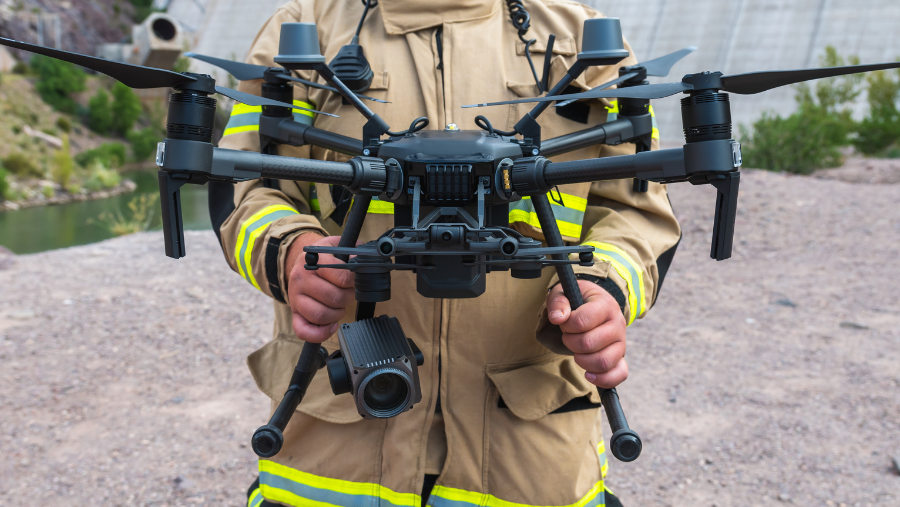
Team LuminOR won the Innovation Prize (NIS 1,800) for a thermal camera system that detects infection sites during and between surgeries, developed by Asaf Bittan (Medicine, PhD candidate), Gal Shamis (Biotechnology and Food Engineering, fourth year), Adam Vichik (Electrical and Computer Engineering, fourth year), and Shaked Yitzhak (Electrical and Computer Engineering, master’s).
Team Pitt won the Impact Prize (NIS 1,000) for a wearable vest paired with an AI avatar that delivers real-time anxiety protocols and monitors a patient’s vital signs from the moment they walk into a clinic. The team: Alisa Goverdovsky (Biotechnology and Food Engineering, second year), Juliet Nassour (Medicine, fourth year), Yuting Yang (Mechanical Engineering, master’s), Hadas Yaron (Medicine, first year), and Tal Yavits (Biomedical Engineering, first year).
The Impact Prize was given in memory of Prof. Yoram Palti, a Technion graduate, longtime faculty member, Israel Prize laureate, and founder of Novocure, whose cancer-treatment research grew out of his own time at the Faculty of Medicine. His daughter, Dr. Dafna Palti, spoke at the ceremony, describing growing up in a household that felt like one long hackathon of entrepreneurship and invention.
Who Made It Happen
T2MED 2026 was organized by Stephanie Shneor, Shai-Lee Cohen, Dr. Lior Lev-Tov, Shahaf Lalo, Mahmoud Ikteelat, Ella Furman, Lior Romano, and Adi Yankovich, with support from the medical centers affiliated with the Faculty of Medicine — Rambam, Carmel, Bnai Zion, Emek, and Hillel Yaffe — along with the Technion Human Health Initiative, the Rappaport Integrated Cancer Research Center (RTICC), the Rappaport Family Institute for Research in the Medical Sciences, Base44, Peregrine Ventures, HiCenter, and other partners.
Why This Matters Beyond the Prize Table
None of these five projects are finished products. What they are is proof of what happens when students with medical training, engineering skills, and three days on the clock are pointed at real clinical gaps: a screening test people will actually use, a surgical safeguard, a mental health tool for kids, an infection detector, and an anxiety-monitoring system, all built from scratch in one weekend.
This is the pipeline Technion Canada connects Canadian donors to — the earliest stage of Israeli medical innovation, before it becomes a company, a paper, or a product on a hospital shelf.