As told by ATS Supporter Norman J. Rosenberg
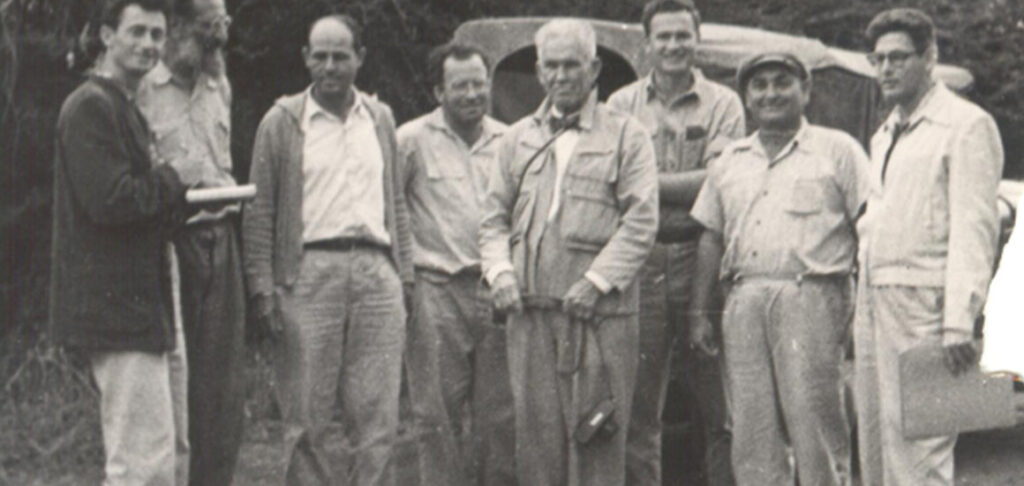
A few years after Israel’s founding, a debate erupted in the Knesset over how to feed its growing population. The country was relying heavily on U.S. donations of surplus grains and dairy products. Some said the country needed to rely less on others and more on its own technological prowess. As one lawmaker declared, “We don’t need powdered milk, we need Lowdermilk.” He was referring to the renowned American conservationist Walter Clay Lowdermilk, the subject of a fascinating book written by Technion supporter Norman J. Rosenberg.
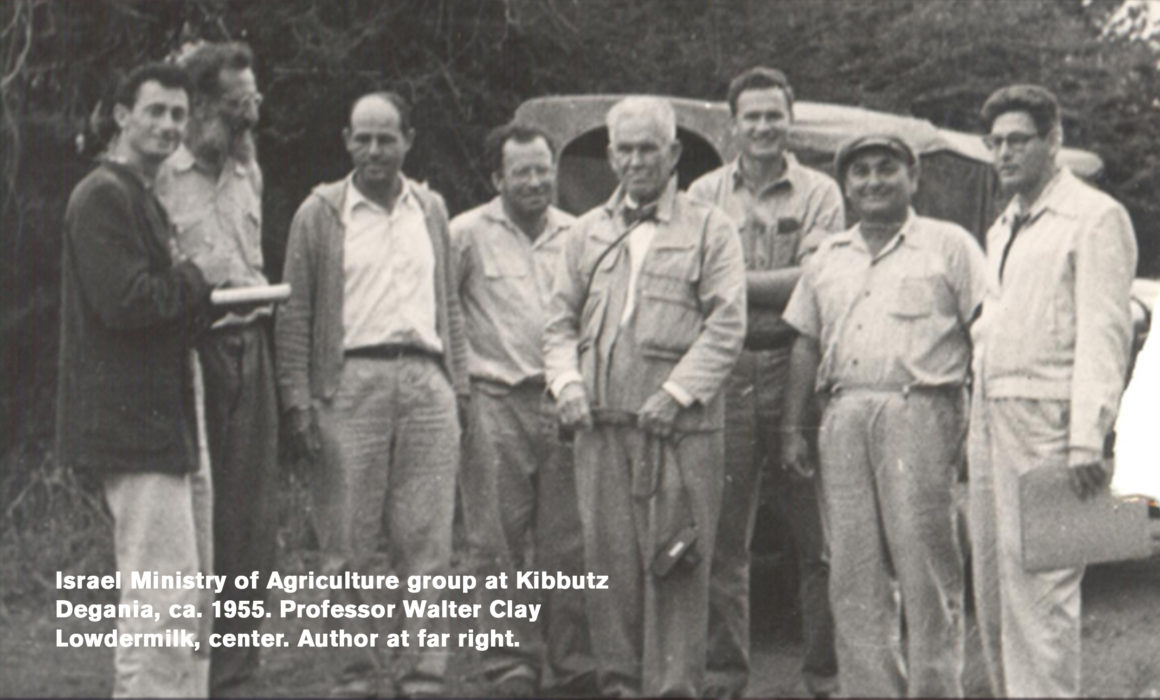
Lowdermilk, not Powdered Milk!: An American conservationist’s unlikely role in Israel’s creation and early development tells the story of Lowdermilk’s pioneering work in water and soil resources, weaving in episodes of Mr. Rosenberg’s own overlapping career in Israel. Mr. Rosenberg is donating proceeds to the Technion, where Lowdermilk helped launch the agricultural engineering department in 1953. “I knew many faculty members, and know Technion students are diligent, hard workers,” he recently recalled. “I think it’s important that an institution like the Technion, which is doing so much in high-tech, continues to contribute solutions to the world’s worsening environmental problems.”
Lowdermilk was Assistant Chief of the U.S. Soil Conservation Service in 1938 during the Dust Bowl years, a period when severe dust storms damaged America’s plains and prairies. On assignment for the Secretary of Agriculture, he loaded his Buick with suitcases, typewriters, cameras, and other supplies for a 20,000-mile, 18-month journey through North Africa and the Middle East to study how a once fertile region had become barren and unproductive. With his wife, two children, niece, and secretary, he visited ancient and modern sites, observing the deforestation, overgrazing, eroded soils, and low productivity typical of the region.
The group crossed the Sinai into Palestine in early 1939. Observing the progress made by Jewish settlers in reclaiming the devastated landscape, Lowdermilk debunked the British White Paper of 1939 that restricted Jewish immigration on the grounds that Palestine lacked the natural resources to support a larger population. His findings influenced the United Nations partition plan, which led to the establishment of the State of Israel, and his book Palestine: Land of Promise outlined a water development scheme that was partially adopted by the National Water Carrier.
Like Lowdermilk, Norman Rosenberg is a soil scientist and advocate for Israel. Soon their worlds would intersect.